Flat rates and real rules: a calm 2026-27 guide to employment expenses
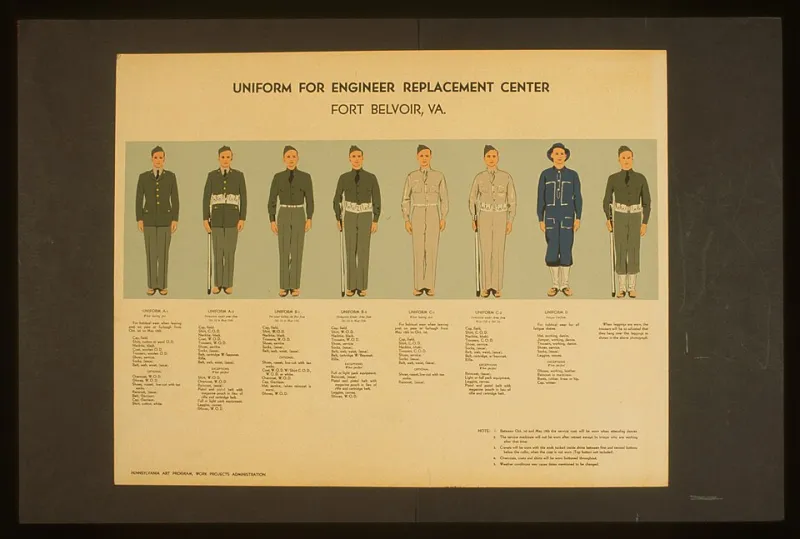
Photo: Work Projects Administration Poster Collection, Public domain, via Wikimedia Commons
The relief is for costs, not for convenience
Employment expenses relief is one of the quieter corners of the tax system. It does not appear on the main rates table, it is rarely mentioned in a payslip briefing, and it is easy to ignore until a colleague mentions that they claim something back each year. The principle, however, is straightforward: if an employee has to spend money to do their job, and the employer does not reimburse that cost, tax relief may be available.
The relief is not a general allowance for working life. It is not a reward for commuting, for ordinary clothing that could be worn outside work, or for costs that properly belong to the employer. It is a targeted adjustment for expenses that are incurred wholly and exclusively in the performance of the employment. That distinction matters in 2026-27 as much as it ever did, and it is the difference between a clean claim and an uncomfortable letter from HMRC.
The practical question is not whether a shoebox of receipts exists. It is whether the employee can explain, calmly and specifically, why the cost was necessary for the job.
Uniforms, specialist clothing and the flat-rate route
Uniform claims are often discussed as though HMRC publishes a single national answer. It does not. The position depends on the employer's requirements and on whether the clothing is ordinary everyday wear. A uniform that an employee must wear, and that is not suitable for ordinary use outside work, is the classic starting point. Specialist clothing such as protective boots, gloves, aprons, overalls or safety headwear can also qualify where the employer requires it and does not provide or reimburse it.
Where the employer operates an approved flat-rate allowance, the administrative burden is reduced. HMRC publishes flat-rate amounts for certain trades and occupations, and these are designed to cover items such as uniform maintenance or laundry without an itemised receipt for every sock, shirt or wash. The employee still needs to be entitled to the allowance. A flat rate is a simplification, not a universal payment.
If the employer pays a tax-free allowance within the approved amount, the employee generally does not need to make a separate claim for that element. If the employer pays nothing, or pays less than the approved flat rate, a claim for the shortfall may be possible. If the employer reimburses actual costs, the relief has usually already been delivered through the payroll, and a further claim would risk duplication.
The calm approach is to check the contract, the staff handbook and the employer's uniform policy before assuming that a flat rate applies. A claim built on a published rate is stronger when it is tied to a real obligation in the job.
Subscriptions, tools and the cost of being able to work
Professional subscriptions are another familiar category, but they are not open-ended. Relief is generally available for subscriptions to professional bodies or learned societies that are relevant to the employment, and HMRC maintains a list of approved bodies. The test is not whether the subscription looks impressive on a CV. It is whether the body is relevant to the duties of the employment and whether the employee is required to maintain the membership, or it is otherwise directly connected to the job.
Tools and equipment follow the same logic. If an employee must provide their own tools, and the employer does not reimburse them, the cost may qualify. If the employer provides the tools, or operates a reimbursement scheme, the employee should not claim the same cost again. Small replacement items, specialist equipment and safety-related purchases are more likely to qualify than general items that could be used at home.
There is no need to turn this into an exercise in forensic accounting. A modest, consistent record of what was bought, why it was needed and whether it was reimbursed is usually more valuable than a carrier bag of faded receipts. The record should support the story, not replace it.
What HMRC actually expects
The phrase 'receipt-free' is misleading. A flat-rate claim may not require a receipt for every individual item, but it does require evidence of entitlement and a reasonable basis for the amount claimed. HMRC expects employees to keep records that show the expense was incurred, that it was not reimbursed, and that it was connected to the employment. Bank statements, order confirmations, employer policies and a simple schedule of costs can all form part of that picture.
Records should be kept for the required period, and a claim should be capable of being explained without reconstructing the year from memory. The standard is not perfection. It is plausibility supported by documents.
Employees should also remember that relief is given at their marginal rate. A £100 allowable expense does not produce a £100 repayment for a basic-rate taxpayer; it reduces taxable income by £100, producing tax relief of £20. For a higher-rate taxpayer, the relief is £40. That arithmetic matters when budgeting, and it is one reason a calm claim is better than an optimistic one.
Making the claim: P87 or Self Assessment
For most employees with modest expenses, the P87 route is the natural starting point. It allows a claim for employment expenses, usually where the total is below £2,500. The claim can be made after the end of the tax year, and it can cover more than one year within the permitted window. Employees who already complete a Self Assessment return can include the expenses there instead.
For 2026-27, the Self Assessment filing deadline is 31 January 2028. A P87 claim can be made once the tax year has ended, and it is sensible to gather the supporting evidence before submitting rather than afterwards. If the claim relates to an earlier year, the same principles apply, but the time limits should be checked carefully before assuming a repayment is still available.
Correcting a claim without drama
Overclaiming is rarely the result of deliberate dishonesty. It more often comes from treating a flat rate as automatic, claiming a subscription that is only loosely connected to the job, or forgetting that an employer already reimbursed the cost. If an error is identified, the correct response is to amend the claim or notify HMRC promptly and clearly. A clean correction is almost always less costly than a prolonged silence.
A simple checklist helps: confirm the job requires the cost; confirm the employer has not paid it; confirm the amount is reasonable and recorded; confirm the claim route is appropriate; and confirm the year is still open. If any answer is uncertain, pause and check rather than guess. Employment expenses relief is a useful and legitimate part of the system, but it works best when it is treated as a matter of evidence rather than enthusiasm.