The home-charge ledger: reimbursing company electric car charging in 2026-27
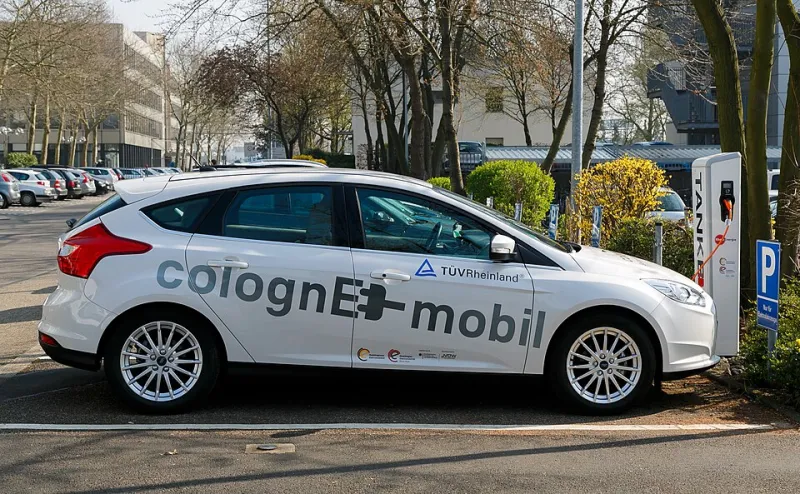
Photo: CEphoto, Uwe Aranas, CC BY-SA 3.0, via Wikimedia Commons
Company electric cars are now a familiar part of the small-business fleet, and so is the practical question that follows them: how should an employer pay for the electricity an employee uses to charge the vehicle at home? The answer is not simply a matter of goodwill. A reimbursement can be tax-free, taxable, or partly both, depending on the method used and the records that support it. For 2026-27, the calm approach is to choose a defensible method, apply it consistently, and keep enough evidence to show why each payment was made.
Why the payment needs a clear basis
The company car benefit charge deals with the private use of the vehicle. It does not automatically answer every question about running costs. A payment towards home electricity is a separate transaction, and it must either fit an exemption or be treated as earnings through payroll.
The risk is rarely dramatic. More often it is a quiet drift: a fixed monthly sum paid without evidence, a mileage rate applied to all journeys, or a reimbursement that covers private charging as well as business travel. Those habits may look harmless in isolation, but they become difficult to defend when HMRC asks how the figure was calculated.
The advisory electricity rate
HMRC publishes an advisory electricity rate for electric vehicles. It has stood at 7p per mile and is used as a practical benchmark for reimbursing business mileage in a company electric car. The rate is advisory rather than statutory, but it gives small employers a simple starting point.
Where an employer pays a mileage rate for business journeys, a payment at or below the advisory rate should not create a PAYE liability. A payment above it risks the excess being treated as earnings unless the employer can show that it represents the actual business cost incurred. The rate should be checked against current HMRC guidance before it is built into a 2026-27 policy, and it should not be used as a substitute for recording the journeys themselves.
Mileage method or actual-cost method?
There are two workable routes, and they suit different employers.
The mileage method is simpler. The employee records business miles, the employer pays the advisory rate or a lower rate, and private mileage is excluded. The evidence needed is a mileage log and a clear policy. The weakness is that electricity prices vary, and a mileage rate is only an approximation.
The actual-cost method is more precise but more administrative. The employee provides evidence of the electricity used for charging, such as a smart-meter report, charging-app history or a domestic electricity bill, and the employer reimburses only the business proportion. That proportion must be calculated from business and private mileage over the same period. A reimbursement of the full domestic charging cost, including private use, is unlikely to be exempt in full.
Neither method is inherently better. The important point is that the employer chooses one, explains it in writing, and applies it consistently rather than switching method to suit the month.
What counts as good evidence?
A reimbursement should be supported by records that a reasonable person could follow. For a home-charging claim, that usually means:
- a mileage log showing business journeys and total mileage for the period;
- charging records from the vehicle, charger or electricity supplier;
- the domestic electricity tariff used to calculate the cost;
- a written calculation showing the business proportion;
- expense reports and payslips showing how the payment was treated.
Employers should keep PAYE records for at least three years after the end of the tax year, and company records for longer under normal company law requirements. A folder of screenshots is not a system. A short written policy, applied to each claim, is far stronger.
The private-use boundary
The company car benefit already taxes private use of the vehicle, but that does not make every related payment tax-free. If an employer reimburses home charging without separating business from private mileage, part of the payment may be earnings. The same applies to a round-sum allowance that is paid regardless of use.
A clean policy will state that only business charging is reimbursed, that private charging remains the employee's responsibility, and that the employee must declare private mileage accurately. Where a car is charged at home and at public networks, public charging receipts should be treated separately and reimbursed only for business journeys.
Payroll treatment and the P11D question
If a reimbursement is exempt, it should not be put through PAYE and should not appear on a P11D. If it is taxable, the excess or the non-exempt amount should be treated as earnings through payroll. Leaving a taxable payment off the payroll and hoping it can be tidied up later is not a compliance strategy.
Small employers should also keep the policy under review. A change in electricity prices, a new charger, or a change in an employee's commuting pattern can alter the calculation. The method can stay the same while the figures are refreshed.
A calm conclusion
Reimbursing home charging for a company electric car is not an exotic tax problem. It is a record-keeping problem with a payroll consequence. Use the advisory electricity rate for simple business mileage claims, or use actual costs with a clear business apportionment. Do not pay a fixed monthly sum without evidence. Keep the paperwork, apply the policy evenly, and the 2026-27 position should be easy to explain if anyone asks.